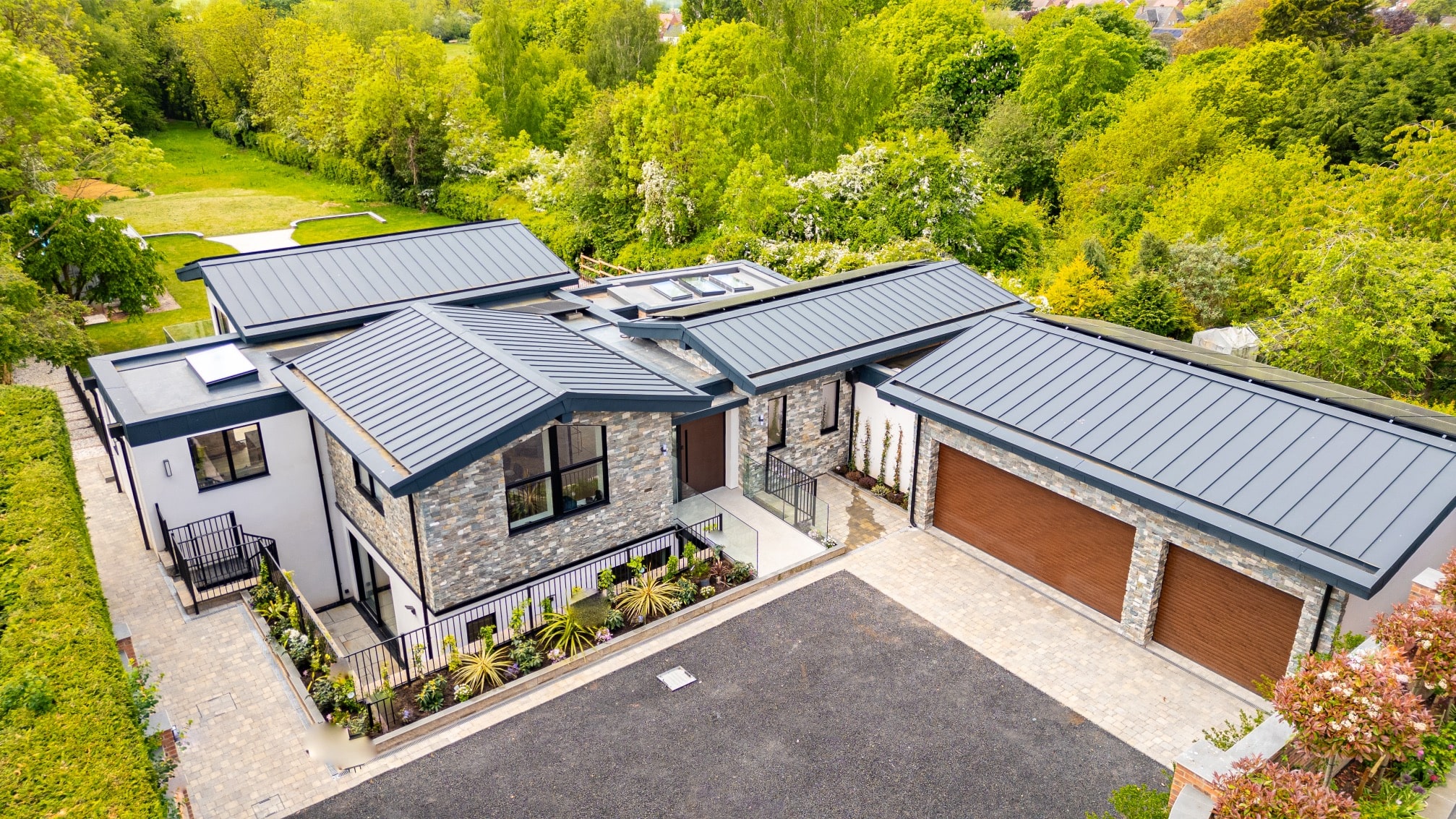
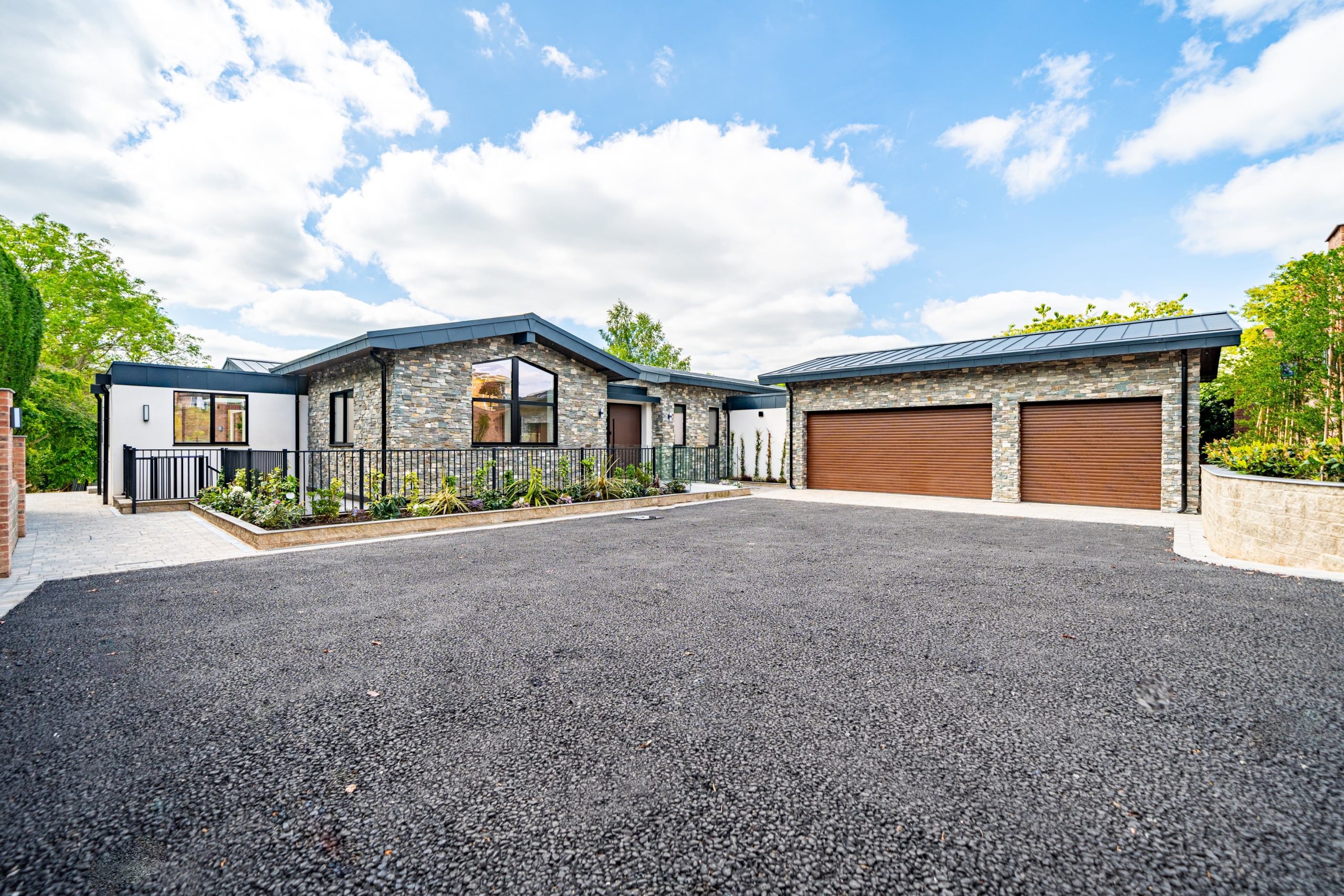
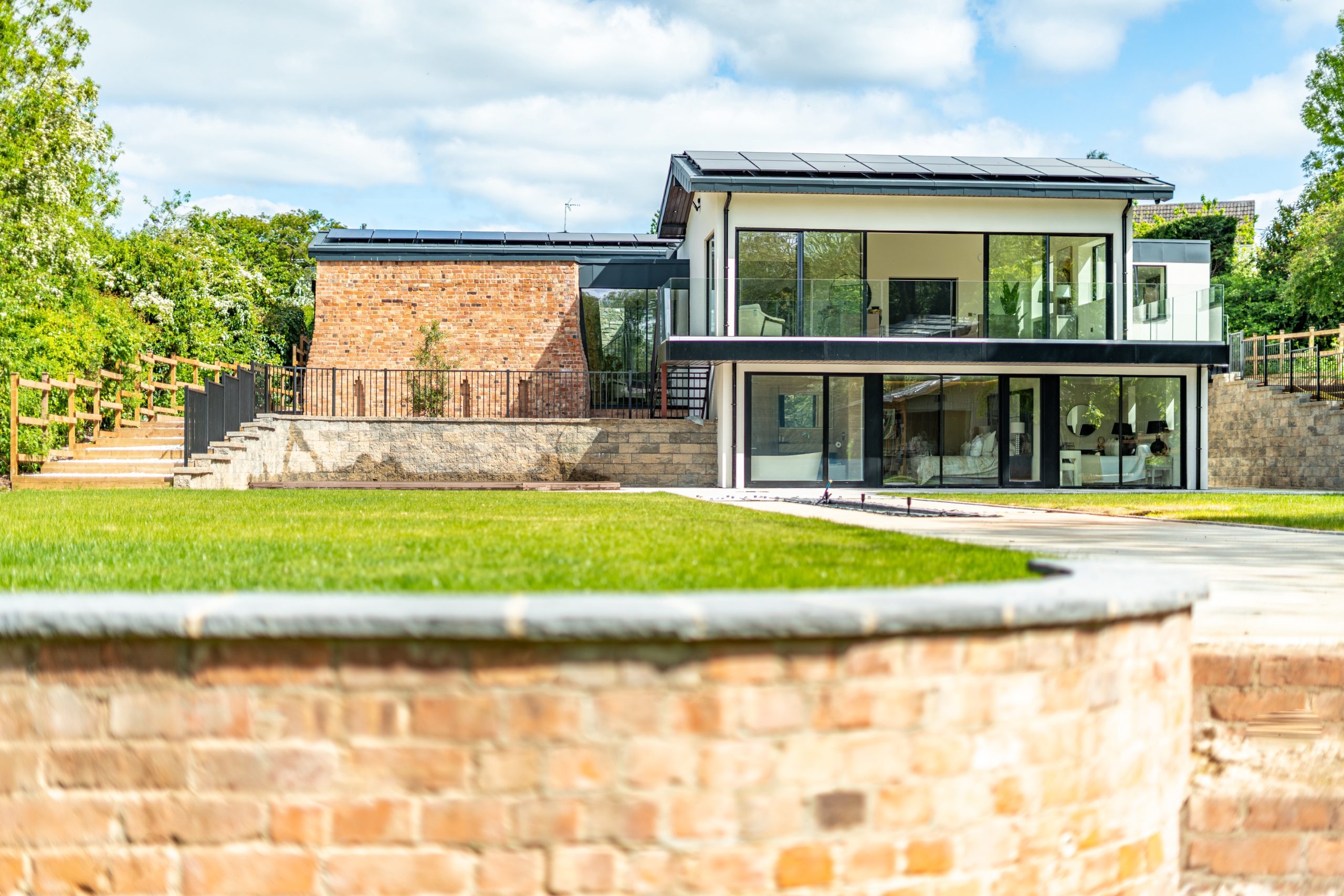
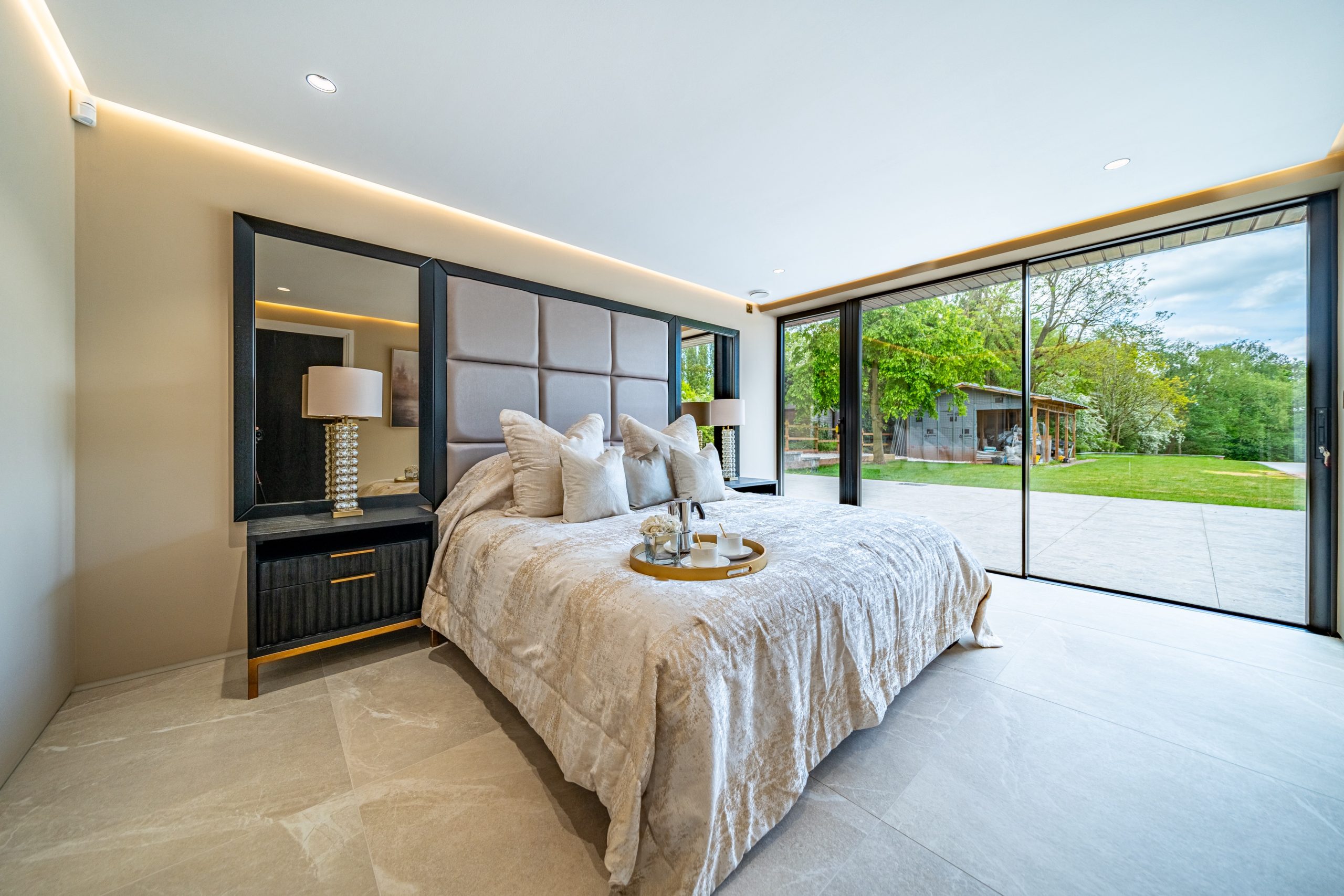
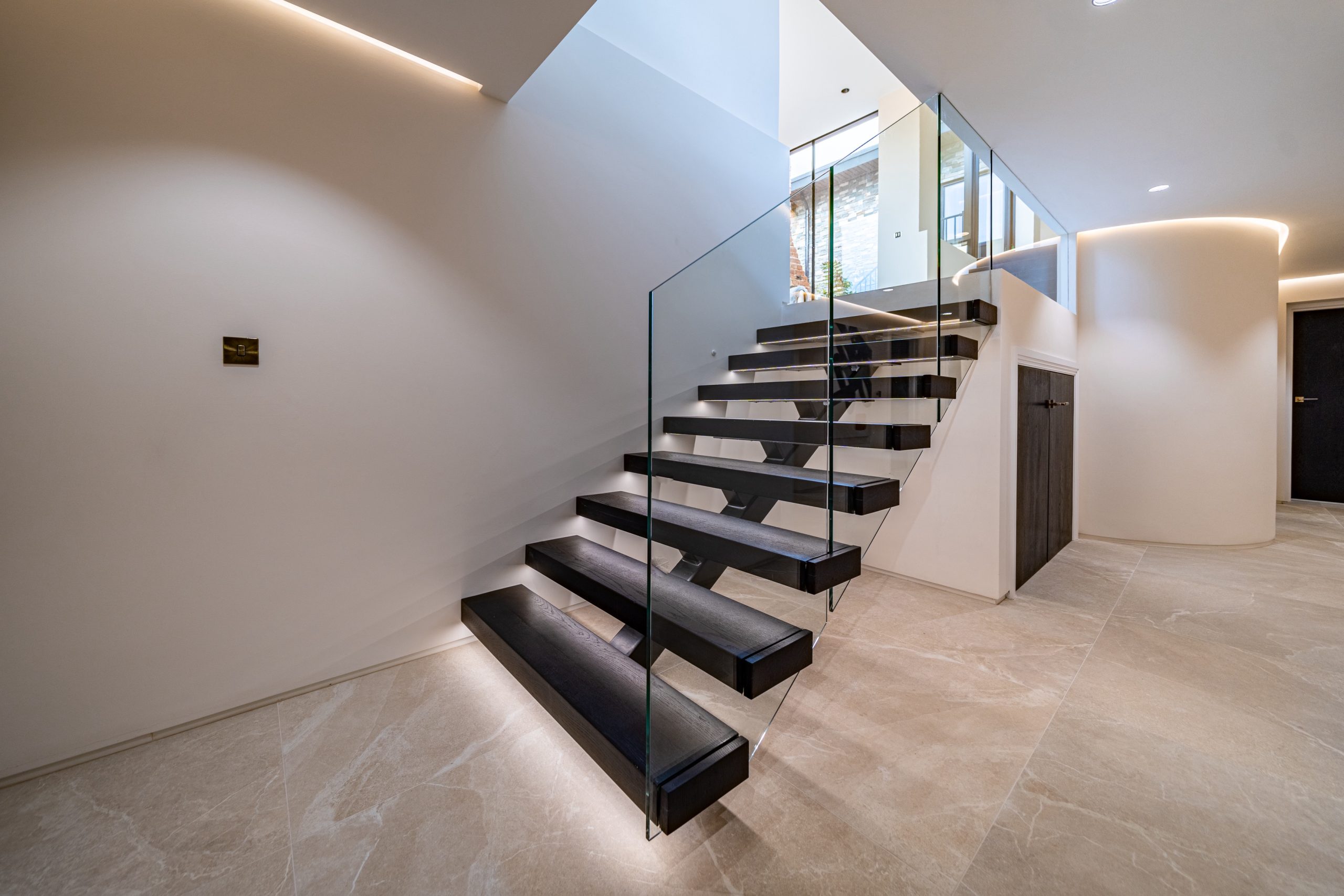
This project which had the benefit of a planning consent reviewed and improved upon the consented scheme for a single detached two-storey dwelling to give the client a more efficient use of space for their living requirements. Without altering the existing building footprint it has increased the number of bedrooms, added a family entertainment room and allowed the inclusion of a formerly disused brick kiln as an office space.
This is one of three similar brick kilns built in the village towards the middle of the 18th century and is the only one to survive. This attractive and unusual feature has created a study within the main building. The scheme has not only preserved this interesting feature of former village life but raised it from obsolescence and given it a new purpose within the new build.
Although the existing kiln is not a listed heritage asset its restoration and inclusion as part of the new build is in harmony with the building fabric, matching materials utilising appropriate techniques where possible.
Outdoor space has been improved, too, which includes a larger garage space and store for vehicle and general storage as well as garden equipment.
The driveway gradient has been eased, allowing for smoother access into the site improving the levels at the boundary of the plot.
Although the number of bedrooms has been increased, the gross external area of the main building footprint has been maintained. The extra floor space required has been created by utilising more of the basement giving the client an additional bedroom with en-suite and a family entertainment room served by an external lightwell.
The developed scheme reduces the level between the north side of the kiln and the fourth bedroom to create a sunken courtyard area.
This allows externally a greater visual acknowledgment of the kiln and its importance to the house by making a visible existing feature ventilation apertures. The design development results in more of the kiln’s features and brickwork remaining visible and accessible enhancing and retaining the historical significance and appearance of the building.
The roofscape has been kept low pitched to keep the visual profile of the building to the front appearing as a single storey building and as low as possible.
Lightwells have been introduced to allow light and access to penetrate into the basement but without obtrusive impact on the overall massing of the property.
The materials have been deliberately chosen to enhance the building façade, the materials create a simple clean, elegant lines, carefully articulated to create interest on each of the facades.
Orchard Homes with careful collaboration with the Architect have selected high quality materials for the internal finishes to match the impressive exterior and overall feel of the building, including a bespoke ‘Nolte Kuchen’ kitchen and Italian tile finishes to the designed wet room ensuites.
The development of the original consented scheme between developer, architect and contractor ensured that the construction and fabric first approach of the development has a high thermal envelope, reducing heat loss through high levels of thermal insulation within the fabric of the building. Low energy lighting and smart controls reduce the overall energy demand and storm water is stored on site to enter the existing water course via a controlled flow.